Properties adjoining scrub oak ravines and natural drainages face dual vector pressure from resting mosquitoes and questing ticks. In mountain-edge neighborhoods like Broadmoor, Cheyenne Mountain, Peregrine, and Rockrimmon, native vegetation touches dense Gambel oak and ponderosa corridors where deer and rodents deposit ticks. Open, higher-wind areas like Briargate, Stetson Hills, and Flying Horse experience localized mosquito swarms around retention ponds, irrigated bluegrass beds, and drainage culverts feeding into Cottonwood Creek. Natural ground cover in older foothill areas such as Old Colorado City presents dense shaded canopies where Culex tarsalis mosquitoes harbor during daylight heat before feeding at dusk.
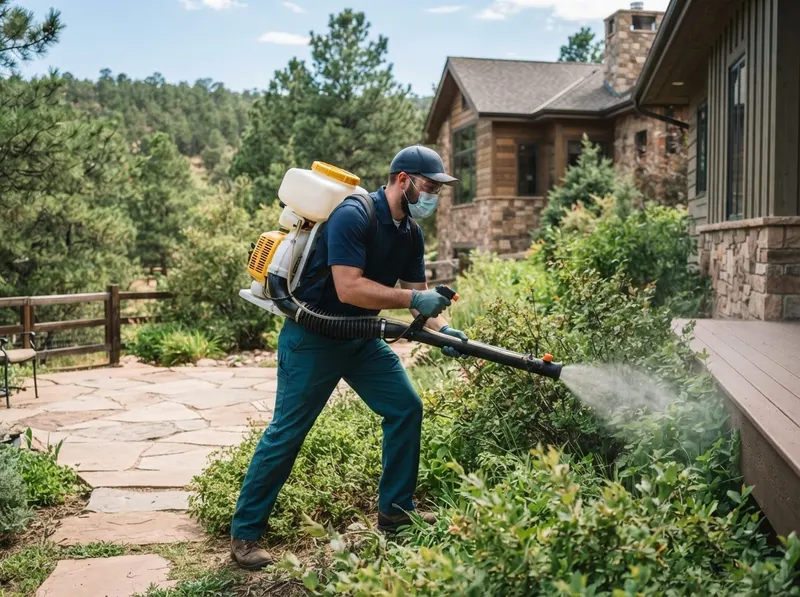
Technicians treat the underside of leaves on broadleaf shrubs, perimeter ornamental trees, and ground cover using microencapsulated synthetic pyrethroids or low-impact essential botanicals. Unlike broadcast aerial fogging that drifts in typical 10 to 15 mph El Paso County afternoon updrafts, specialized motorized mist blowers apply charged droplets directly to leaf undersides where adult mosquitoes cling. Granular tick barriers are laid in a continuous 3-to-5-foot swath along the interface between maintained turfgrass and native brush to intercept questing nymphs and adults crawling toward patios or play areas.
1. Technicians conduct an inspection of gutters, corrugated downspout extensions, bird baths, and catch basins to detect larvae, treating non-potable standing water with Bacillus thuringiensis israelensis (BTI) dunks.
2. Motorized backpack sprayers apply targeted mist across perimeter shrubbery up to 10 feet, creating a continuous chemical barrier that remains active for 21 to 30 days.
3. Technicians apply a uniform granular insecticide band across natural tall grass perimeters, wood piles, and rock borders to block tick transit.
A single perimeter reduction service fits standard suburban lots requiring suppression for specific summer gatherings, whereas ongoing 21-to-28-day maintenance intervals fit properties with natural irrigation run-offs or direct borders along open space preserves. The technical trade-off involves product residual duration: heavy Front Range rainstorms exceeding 1 inch within 24 hours of application will shorten the residual efficacy faster than hot, dry summer conditions, requiring localized touch-ups along perimeter drain paths.